
Fast Charger Buying Guide (2025): PD, PPS, SuperVOOC & QC Explained
How to choose the right fast charger in 2025 wattage, ports, PD vs PPS vs SuperVOOC vs QC, safety certifications, and which Aeromex charger fits your phone.
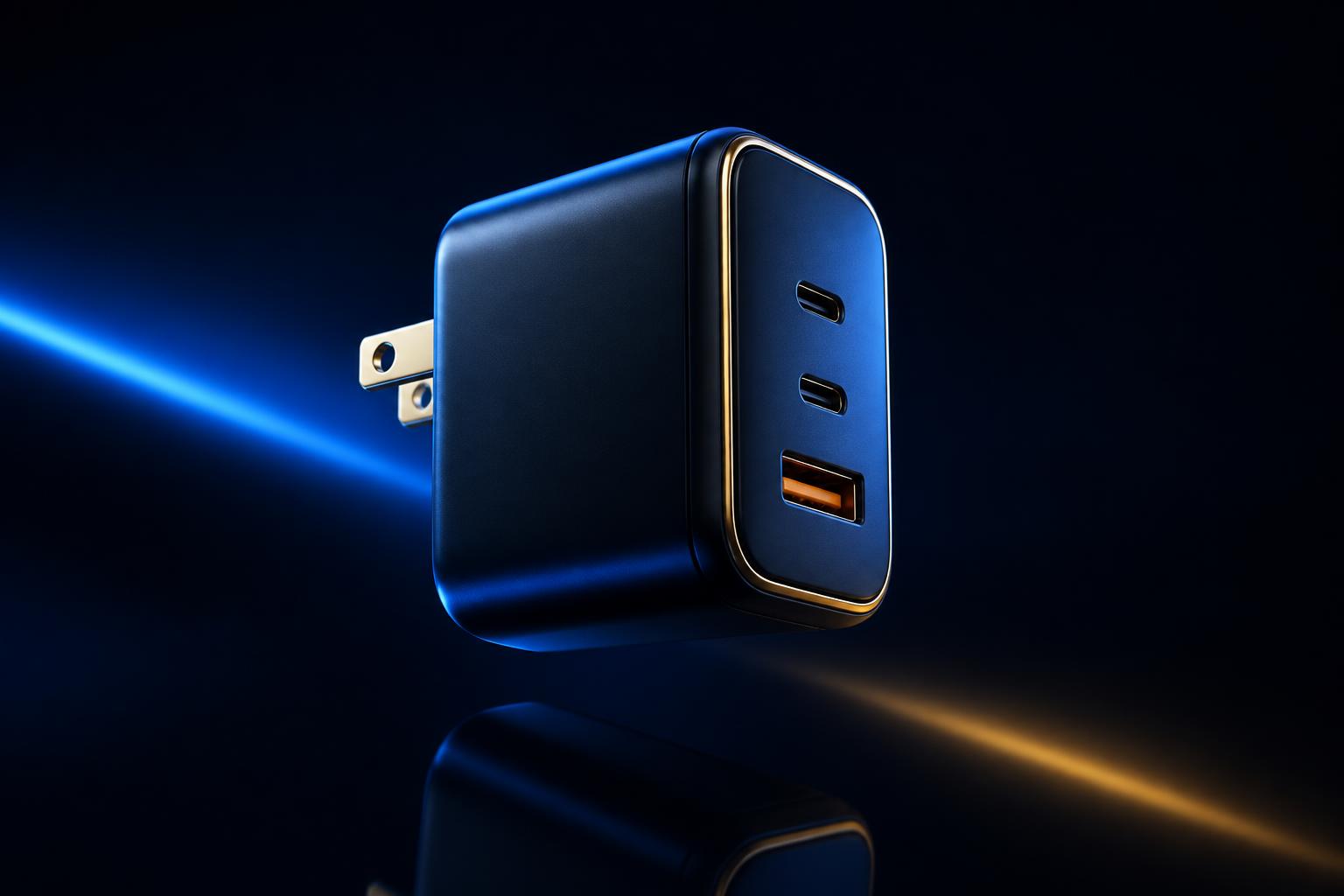
A fast charger is no longer a luxury it is the difference between a 20-minute top-up and an hour wasted near a wall socket. But not every '65W' brick is equal. This guide walks you through wattage, protocols, ports and safety so you can pick a charger that actually charges your phone at its rated speed.
Match the wattage to your phone, not the spec sheet
Modern flagships peak between 25W and 100W, while most mid-range phones top out at 33W-67W. A higher-wattage charger will not damage your device phones negotiate the safe maximum but anything below your phone's spec will throttle charging. For a household with iPhones, OnePlus and Samsung devices, a 65W dual-port charger is the sweet spot.
- iPhone 15/16: 20W-27W via USB-C PD
- Samsung Galaxy S series: 25W-45W via PD/PPS
- OnePlus & Realme: 65W-100W via SuperVOOC / SuperDart
- Xiaomi & Vivo: 33W-120W via PD/PPS plus proprietary
Understand the protocols (this is where cheap chargers fail)
USB-PD is the universal standard supported by Apple, Google and Samsung. PPS is a PD extension that fine-tunes voltage required for Samsung Super Fast Charging 2.0 and most 45W+ Android devices. SuperVOOC/SuperDart is OPPO/OnePlus/Realme's proprietary protocol. QC 3.0/4.0 covers older Qualcomm devices. A truly universal charger supports all four.
Single port vs dual port
If you only charge a phone, a single USB-C port is fine. If you also charge earbuds, a tablet or a laptop, pick a dual-port charger with one USB-C (PD/PPS) and one USB-A (QC). Just remember that combined output is usually capped a 65W dual-port typically delivers 45W + 18W when both ports are used.
Safety first: protections that matter
A reputable charger lists OVP (over-voltage), OCP (over-current), OHP (over-heat) and SCP (short-circuit) protection on the casing. Combined with a fire-resistant shell, these are what stop cheap imports from melting at 2am. Skip anything without these markings.
Our pick from the Aeromex range
The AMX 65W Fast Charger delivers PD, PPS, SuperVOOC, SuperDart and QC 3.0/4.0 in one compact, fire-resistant body so a single charger covers every phone in the house and still tops up a laptop at airport pace.
Frequently asked questions
- Will a 65W charger damage my 20W phone?
- No. Phones negotiate the safe charging speed with the charger. A 65W brick will simply deliver 20W to a 20W phone and use the extra headroom for a second device.
- Why is my fast charger charging slowly?
- Most often it's the cable fast charging requires an E-marker USB-C cable rated for the wattage. Check the cable spec, then check that the phone supports the charger's protocol (PD/PPS/SuperVOOC).
- Is GaN worth paying for?
- GaN chargers are smaller and run cooler for the same wattage, which matters above 45W or for travel. Below 30W the size benefit is marginal.